By Jemimah Wellington, JKNewsMedia Correspondent
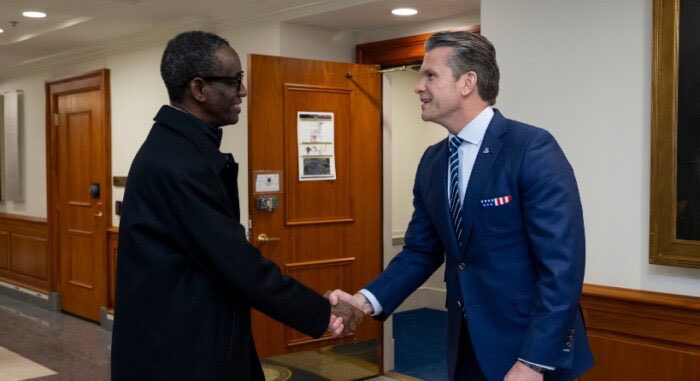
WASHINGTON, DC witnessed crucial discussions last week as a high-level Nigerian delegation secured renewed commitments from the United States to strengthen bilateral security cooperation.
The engagements, which spanned senior offices across the United States (US) Congress, the White House Faith Office, the State Department, the National Security Council, and the Department of War, culminated in assurances of enhanced intelligence support, expedited defence equipment provision, and additional security resources to support Nigeria’s ongoing operations against terrorist and violent extremist groups.
The delegation was led by the National Security Adviser, Nuhu Ribadu, and included the Attorney General of the Federation, Lateef Fagbemi; Chief of Defence Staff, General Olufemi Oluyede; Chief of Defence Intelligence, Lieutenant General Emmanuel Undiandeye; Inspector General of Police, Kayode Egbetokun; and two representatives of the Office of the National Security Adviser.
A statement issued on Monday by the Special Adviser to President Bola Tinubu on Information and Strategy, Bayo Onanuga, outlined that the Nigerian delegation refuted allegations of genocide in the country, emphasising that violent attacks cut across religious and ethnic communities.
“The delegation strongly rejected wrongful framing of the situation, noting such portrayals could divide Nigerians and distort the realities on the ground,” Onanuga said.
The meetings provided opportunities for both countries to establish constructive, solution-driven frameworks.
Onanuga also stated that the engagements reinforced mutual trust, advanced coordinated approaches to protecting vulnerable communities, particularly in Nigeria’s Middle Belt, and forged channels for technical support to strengthen early-warning mechanisms.
The US government also expressed willingness to extend complementary assistance, including humanitarian aid to populations affected by ongoing violence.
Enhanced intelligence sharing, accelerated processing of defence equipment requests, and potential provision of excess defence articles, subject to availability, were explicitly discussed as part of the security cooperation framework.
Both countries agreed to implement a non-binding cooperation framework immediately and to establish a Joint Working Group tasked with ensuring a unified and coordinated approach to the areas of agreed cooperation.
Onanuga noted that the Nigerian delegation reaffirmed the government’s commitment to bolstering civilian protection measures.
“The Federal Government restates its awareness of heightened sensitivities regarding religious freedom and security, and urges citizens to remain assured that firm, urgent, and coordinated steps are being taken to secure the nation,” he added.
These developments follow a statement by former US President Donald Trump in which he threatened military intervention in Nigeria, claiming the country was allowing the killing of Christians.
Trump also described Nigeria as a “Country of Particular Concern” and vowed that US forces would act decisively if such incidents continued.
President Bola Tinubu rejected claims of genocide, reiterating Nigeria’s commitment to religious freedom, tolerance, and protecting all citizens irrespective of faith.
The Nigerian delegation’s interactions in Washington aimed to correct misconceptions regarding the country’s security situation and to explore avenues for deeper collaboration with the US.
Discussions covered enhanced intelligence sharing to disrupt terrorist networks, provision of defence equipment to support counterterrorism operations, and technical assistance to improve early-warning capacities for vulnerable communities.
Onanuga confirmed that both nations agreed on the immediate execution of a non-binding cooperation framework, complemented by a Joint Working Group responsible for monitoring progress and ensuring a coordinated approach across all agreed areas.
The framework is designed to expedite decision-making and streamline collaboration between Nigerian and US security agencies.
The delegation also highlighted Nigeria’s proactive steps in civilian protection, counterterrorism operations, and the preservation of religious freedom across all states.
“Violent attacks affect families and communities irrespective of religion or ethnicity, and the government remains steadfast in addressing these challenges through targeted security measures and humanitarian initiatives,” Onanuga emphasised.
The US assurances of support include potential deployment of excess defence articles, technical assistance to strengthen early-warning systems, and provision of humanitarian aid for populations impacted by insurgent attacks, particularly in the Middle Belt region.
Both parties expressed commitment to a unified approach, with regular consultations and coordinated actions designed to prevent escalation and protect civilians.
During the engagements, the Nigerian delegation also stressed the importance of dispelling misconceptions in international discourse.
Onanuga reiterated that wrongful portrayals of the country’s security situation could foster division and distort public understanding.
The discussions therefore centred on establishing facts, creating reliable information channels, and advancing collaborative security initiatives.
Officials indicated that the outcome of the US-Nigeria meetings would have immediate operational impact.
Requests for defence equipment are to be prioritised, intelligence sharing protocols enhanced, and joint strategies developed to counter terrorism and violent extremism.
Humanitarian support measures are also set to be scaled up to alleviate the impact of insurgent activities on civilian populations.
Onanuga described the discussions as pivotal in strengthening US-Nigeria relations.
“The engagements opened new avenues for cooperation, reinforced mutual trust, and established a coordinated approach to protecting vulnerable communities.
Both countries remain committed to working together in addressing security challenges and advancing civilian protection measures,” he said.
The President’s media adviser further highlighted that the collaboration framework would guide ongoing operations, ensuring that Nigeria’s security institutions work in concert with US counterparts.
This includes intelligence-led operations, provision of technical support, and rapid mobilisation of resources for counterterrorism missions.
The statement reaffirmed Nigeria’s adherence to religious tolerance and the protection of human rights while taking firm steps against violent extremist groups.
The government reiterated that its security strategy is inclusive, addressing threats to all citizens, and remains vigilant against attempts to misrepresent the situation to the international community.
Following the engagements, officials noted that the partnership would extend beyond immediate security concerns, potentially encompassing longer-term technical assistance, training, and capacity building for Nigeria’s security agencies.
Both sides committed to maintaining regular dialogues and updates to ensure alignment of objectives and continued support.
The Nigerian delegation’s visit to the US underscores the government’s proactive approach to foreign diplomacy in security matters and its resolve to engage international partners in addressing domestic threats.
The discussions mark a significant milestone in US-Nigeria security relations, providing a structured platform for ongoing collaboration, intelligence sharing, and operational support in counterterrorism efforts.
By establishing a Joint Working Group and agreeing to a non-binding cooperation framework, both countries signalled their intent to adopt a methodical, collaborative, and sustainable approach to national security.
This initiative represents a critical step in ensuring that Nigeria’s counterterrorism operations are supported with timely intelligence, adequate resources, and international coordination.
President Bola Tinubu’s administration continues to assert that all actions taken are in accordance with national law and international obligations, ensuring that citizens’ rights and religious freedoms remain protected while security forces engage decisively against threats to public safety.