By Joke Kujenya
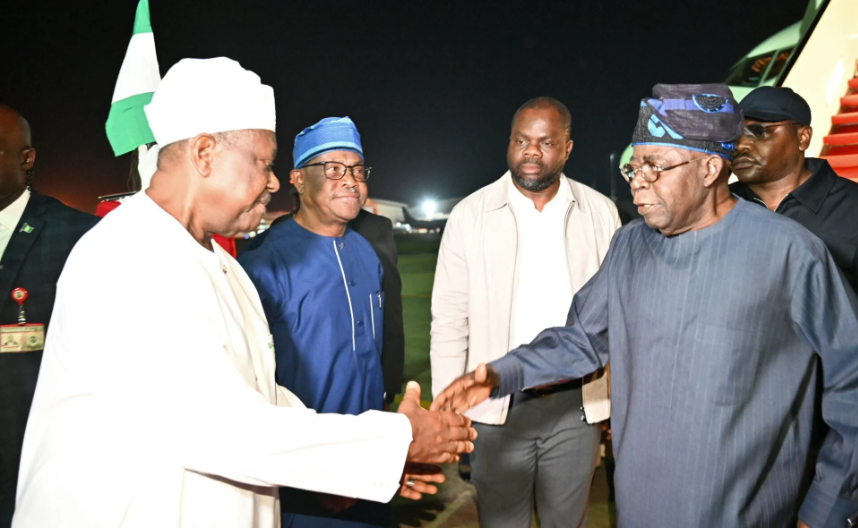
TOUCHING DOWN in Abuja on Monday evening, President Bola Tinubu returns to the country following an extended 19-day absence, from his private visits to France and the United Kingdom (UK) that were officially described as a “working visit.”
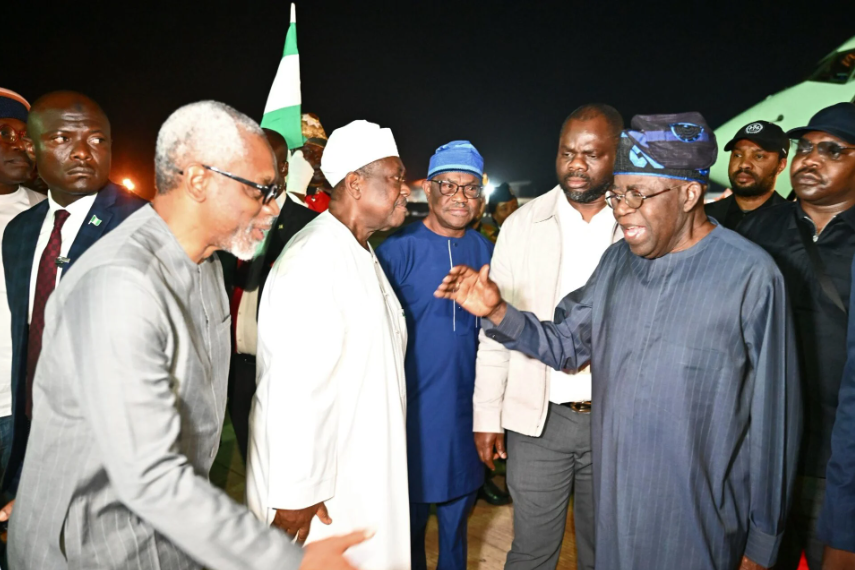
The president arrived at the presidential wing of the Nnamdi Azikiwe International Airport, where he was welcomed by senior members of his administration, including Chief of Staff Femi Gbajabiamila, Minister of the Federal Capital Territory Nyesom Wike, National Security Adviser Nuhu Ribadu, and Secretary to the Government of the Federation, George Akume.
Tinubu’s trip, which began on April 2 with his departure for Paris, was not accompanied by detailed public disclosures, fuelling speculation about the scope and substance of his engagements overseas.
His media adviser Bayo Onanuga had earlier described the trip as a “short working visit” during which the president would review the progress of his administration’s policies and programmes.
However, the length of Tinubu’s stay abroad, extending beyond two weeks to nearly three, drew sharp criticism from opposition leaders and segments of the public.
During the president’s absence, Nigeria experienced a surge in violent attacks and abductions across several states, particularly in Plateau, Benue, and Borno.
Oppositions comprising former Vice President Atiku Abubakar and Labour Party leader Peter Obi were among those who condemned the timing and duration of Tinubu’s absence, warning that the country’s escalating insecurity demanded more visible leadership.
“While he remains abroad, Nigeria bleeds,” Obi remarked in a recent statement, echoing concerns voiced across political and civic platforms.
Despite the criticism, no official briefing has been offered regarding the outcomes of Tinubu’s overseas engagements, leaving questions unanswered as to whether new policies, agreements, or diplomatic inroads were secured during the visit.