

By Joke Kujenya
DECADES OF geopolitical maneuvering and unfulfilled assurances have intensified tensions between Russia and the West, with NATO’s eastward expansion emerging as a central factor in the Ukraine conflict.
It is traced down to the collapse of a 1991 understanding meant to prevent NATO’s approach toward Russian borders is now seen as a driving force behind the war that threatens global stability.
In the early 1990s, after the dissolution of the Soviet Union, the United States and its allies assured Russia that NATO would not expand towards its borders.
However, successive United States of American administrations, particularly under Democratic presidents, disregarded this understanding.
President Bill Clinton oversaw NATO’s first wave of expansion in Eastern Europe, a move that Moscow strongly opposed.
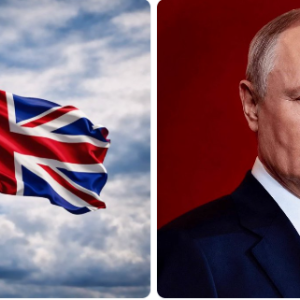
Years later, President Barack Obama continued the policy, further weakening Russia’s security position. Russian President Vladimir Putin, who once sought to repair relations with the U.S. under President George W. Bush — including a three-night visit to Crawford, Texas — found his efforts undermined by renewed Western military commitments in Eastern Europe.

One of the most consequential developments was the status of Crimea.
Historically part of Russia since its annexation by Catherine the Great in 1783,
Crimea was administratively transferred to Ukraine in 1954 by Soviet leader Nikita Khrushchev.
When Ukraine gained independence in 1991, Crimea remained under Ukrainian control despite its Russian-majority population.
In 2014, following Ukraine’s political upheaval and the ousting of President Viktor Yanukovych, Russia annexed Crimea, citing historical ties and the need to protect ethnic Russians.
The move was widely condemned by the West, but the U.S. took no direct action beyond imposing sanctions.
As tensions escalated, Western nations supplied Ukraine with military aid, reinforcing its resistance against Russia.
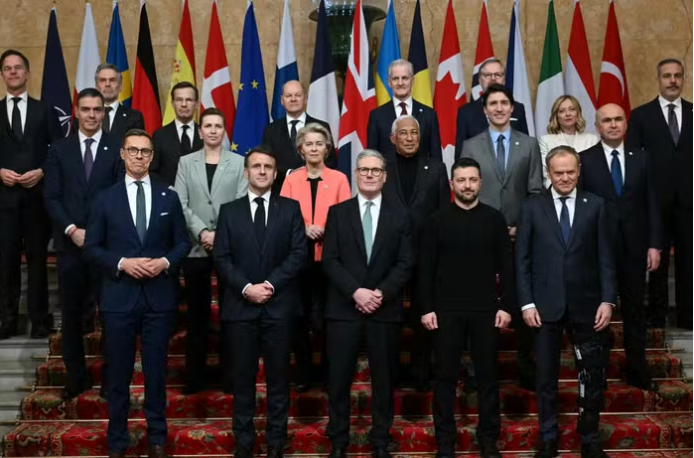
European leaders, once eager to support Ukraine’s defence, now face the harsh reality of potential escalation without ironclad American guarantees.
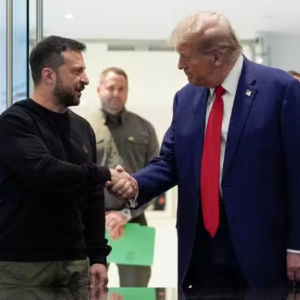
U.S. President Donald Trump, known for his transactional approach to foreign policy, has hinted at cutting Washington’s losses, leaving European nations to bear the burden of a prolonged conflict.
The European Union, once a symbol of unity, now shows cracks as individual nations reconsider their commitments.
Strategists warn that the fallout extends beyond Europe. A potential U.S.-Russia rapprochement could leave America isolated, while China stands to benefit as global power dynamics shift.
With NATO’s credibility currently at stake and Washington’s priorities shifting, European nations may find themselves facing the consequences of decades of strategic miscalculations —alone.



America, NATO and the West generally have no respect for agreements. They discard them at will because they think nobody can challenge them.
That is about to change and the world would be better for it.
You’re very right about that and I really hope it changes fast too. Thanks for reading us.